






Your solar questions, answered
General
For homes, an on-grid system typically costs ₹55,000–₹70,000 per kW before subsidy, depending on brand, structure height and site conditions. Commercial and industrial systems cost less per kW thanks to scale. Use our solar calculator for an instant estimate, then book a free site assessment for an exact quote.
Roughly 80–100 sq. ft of shadow-free area per kW. A 5 kW home system needs about 400–500 sq. ft. Elevated structures let you keep using the terrace underneath.
Subsidy
Residential consumers get ₹30,000 per kW for the first 2 kW and ₹18,000 for the 3rd kW — up to ₹78,000 for systems of 3 kW and above. Special-category states and UTs receive higher amounts. Housing societies can also claim support for common facilities. We file and track your subsidy end to end.
Savings
Homes typically recover their investment in 3–5 years after subsidy, and commercial users in 3–4 years thanks to higher tariffs. With panels lasting 25+ years, you enjoy two decades of nearly free electricity.
Yes. Homeowners can choose easy EMIs through partner banks and NBFCs. Businesses can choose CAPEX, EMI or RESCO/PPA models where you pay only for the power generated with no upfront investment.
Technical
No — for safety, on-grid inverters shut down when the grid fails so no power flows back to linemen. If you need backup, choose a hybrid system with batteries, which keeps critical loads running automatically.
Tier-1 modules come with a 25–30 year performance warranty and typically degrade only ~0.5% a year. Inverters usually last 10–15 years.
Process
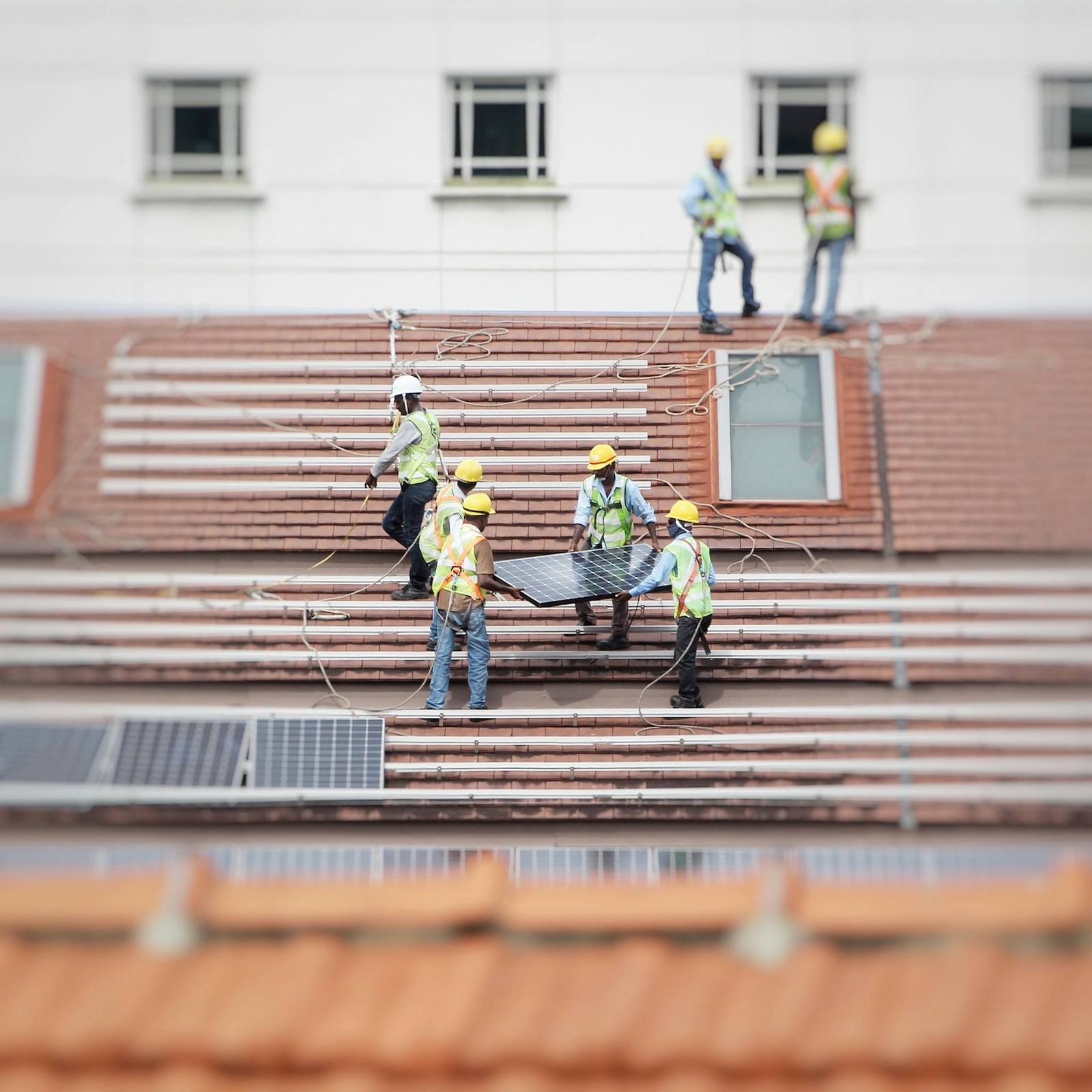
A home system is usually installed in 1–3 days. Net-metering and DISCOM approvals typically take 2–6 weeks depending on your state. Commercial and industrial projects range from 3 to 12 weeks based on size.
Net metering uses a bi-directional meter to record power you import from and export to the grid. Surplus solar units are credited against your bill, so you only pay for the net units consumed.
Maintenance
Very little. Clean the panels every 2–4 weeks (more often in dusty areas) and get an annual health check. Our AMC plans cover cleaning, inspections and monitoring.